Elmhurst Epoxy Flooring installs industrial epoxy flooring in Elmhurst, IL, serving surrounding cities including Northlake, Bellwood, Bensenville, Franklin Park and Westchester. Industrial floors carry forklifts, steel-wheeled carts, dropped parts, coolant, oil and cleaning chemicals, often all in the same building, and our 20+ years of concrete preparation and resin floor work go into building systems that hold up to that daily punishment.
Elmhurst’s employers include valve, fastener and industrial-service manufacturers and large distribution operations, and the surrounding ring holds dense industrial corridors around O’Hare and along the rail lines. Floors in those buildings are working surfaces, and they need to be specified like equipment, not chosen like decor.
Every industrial proposal we write names the system for each area, the number of coats, the finished thickness, the texture and the phasing plan. That gives your maintenance and safety teams something concrete to check the work against.
Industrial Floor Systems
High-Build 100% Solids Epoxy
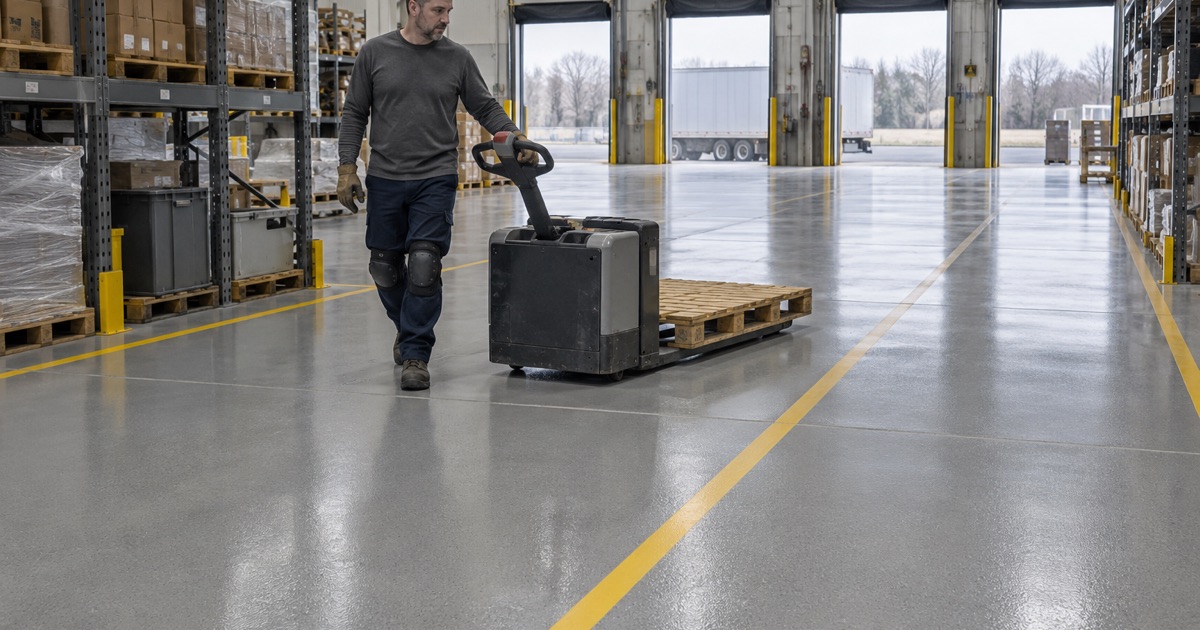
High-build epoxy applied in multiple coats creates a thick, seamless surface with strong bond and good chemical resistance. It suits assembly areas, light manufacturing, maintenance shops and storage zones. Quartz or aluminum oxide broadcast can be added for texture and extra wear resistance in traffic lanes.
Troweled Epoxy Mortar
Where floors take heavy impact, dragged loads or rough steel wheels, a troweled epoxy mortar several times thicker than a standard coating provides much greater durability. It can also level uneven slabs and rebuild worn areas. Mortar systems are sealed with a chemical-resistant topcoat.
Urethane Cement
Urethane cement handles thermal shock, hot washdown and many aggressive chemicals better than epoxy, and it tolerates more moisture in the slab. It is common in food processing, some chemical areas and anywhere floors are cleaned with steam or very hot water. It is installed thicker than most coatings and finished with a textured or smooth surface.
Chemical-Resistant Topcoats
Where acids, solvents or caustics are present, standard epoxies may soften or stain. Novolac epoxy and other specialty topcoats provide higher chemical resistance. We review the chemicals used in each area with your team and select a topcoat rated for them, rather than assuming one product suits every zone.
Safety data sheets for the products on your floor are the best starting point. They tell us what spills, how concentrated it is and how hot it may be, which is the information a coating maker’s chemical-resistance chart needs before it can say anything useful about how a topcoat will hold up.
What Industrial Floors Are Up Against
Forklifts and Wheel Loads
Forklift and pallet jack wheels concentrate weight on small contact areas, and hard wheels concentrate it further. Polyurethane tires are relatively gentle, while steel, nylon and phenolic wheels are much harder on coatings and need high-build or mortar systems underneath. We ask about the equipment in each area before recommending a build.
Turning zones, dock plates and the ends of racking aisles take the most abuse, because wheels pivot and scrub there rather than rolling straight. We often build those zones thicker or with a tougher system than the straight runs between them.
Coolant, Oil and Metalworking Fluids
Machine shops deal with coolant, cutting oil and metal chips that collect on floors and soak into bare concrete. A sealed, chemical-resistant floor keeps fluids on the surface for cleanup and prevents them from saturating the slab. Texture is added where fluids make floors slippery.
Impact and Abrasion
Dropped parts, tools, pallets dragged across floors and the grit carried in from loading docks wear down thin coatings quickly. Thicker systems, aggregate-filled mortars and hard topcoats resist this wear. Areas around machines and workbenches often need extra protection.
Welding and grinding stations add another hazard: hot spatter and slag land on the floor and can burn small pits into a thin coating. Those cells usually get a heavier, more heat-tolerant build, and sometimes a sacrificial mat or plate where sparks land constantly, so the rest of the floor is not judged by the worst few square feet.
Heat and Washdown
Hot water, steam cleaning and spills of hot liquids can cause thermal shock that cracks or debonds rigid coatings. In those areas we recommend urethane cement or another system rated for thermal cycling, with properly detailed drains and cove bases.
Safety Markings and Slip Resistance
Aisle Lines and Floor Marking
Aisle lines, pedestrian walkways, forklift lanes, hazard zones and storage areas can be marked in contrasting coating colors built into the floor system. These markings support 5S and visual workplace programs and last far longer than tape or paint applied on top of a finished floor.
We lay out markings with your safety team before installation, so walkways line up with doors, stairs and exits and forklift lanes keep clear of workstations. Changing a layout after the colors are down means grinding out finished coating, so the drawing gets settled first.
Texture in Wet and Oily Areas
Slip resistance comes from the broadcast aggregate and the topcoat used. We specify more texture in wet, oily and sloped areas, and smoother finishes where frequent cleaning matters more than grip. Texture is written into the proposal by area, so the floor’s performance is part of the specification.
Installing Around Production
Phasing and Shutdowns
We plan industrial installations around your production schedule, using weekends, holiday shutdowns and night shifts. Large floors are divided into phases so only part of the plant is out of service at a time. Fast-cure topcoats help areas return to service sooner.
The phasing plan shows which areas are closed, when they return to service and where equipment and inventory need to be moved. We review it with production managers in advance, so the work fits the plant rather than the other way around.
Preparing Contaminated Slabs
Industrial slabs often carry years of oil, coolant, sealers and old coatings. We remove surface contamination by grinding or shot blasting, degrease where needed and test adhesion in suspect areas. Heavily saturated concrete may be cut out and patched before coating.
Grinding dust and contaminated slurry are captured at the machine with industrial vacuums and bagged, never washed toward a trench drain or floor sump. In a working plant that also keeps fine dust away from bearings, controls and finished goods sitting a few aisles over.
Joints and Cracks
Joints damaged by forklift wheels are rebuilt with repair mortar and filled with semi-rigid filler that supports traffic. Cracks are repaired before coating. Fixing joints first prevents the new floor from breaking along them and keeps equipment from jolting as it crosses.
- 20+ Years on Concrete
- Moisture Testing in Every Scope
- Ground, Never Acid-Etched