Elmhurst Epoxy Flooring installs commercial epoxy flooring in Elmhurst, IL, serving surrounding cities including Northlake, Bellwood, Bensenville, Franklin Park and Westchester. Commercial floors face heavier traffic, harsher cleaners and tighter schedules than home floors, and in 20+ years of floor work we have learned that the system and the schedule matter as much as the color.
Every commercial job starts with a site visit, a moisture test and a written scope. The proposal names the product line, the number of coats, the finished thickness and the texture for each area, along with a phasing plan that shows when each part of the building is out of service and when it comes back.
Elmhurst’s largest employers include a hospital system, a school district, a university, manufacturers and distribution companies, alongside downtown shops and office towers. Each of those settings asks something different of a floor, and we choose the system to match the room rather than selling one product for every space.
Matching the System to the Floor
High-Build 100% Solids Epoxy
A 100% solids epoxy contains no solvent to evaporate, so what goes down is what remains, building thickness quickly with strong bonding to ground concrete. It is the backbone of most commercial systems, from back-of-house corridors to light manufacturing floors, and it can be built to the thickness the traffic demands.
Quartz Broadcast Systems
Colored quartz broadcast into epoxy and sealed under a clear topcoat creates a durable, decorative and slip-resistant floor. It is common in locker rooms, restrooms, lobbies, commercial kitchens and wet entries. Texture is controlled by the size of the quartz and the thickness of the topcoat, so we can match grip to the area.
Quartz systems are also forgiving to maintain. The aggregate hides scuffs and minor wear, the color runs through the broadcast layer rather than sitting only on top, and a worn traffic lane can usually be refreshed with a new topcoat years later instead of a full replacement.
Urethane Cement for Heat and Chemicals
Where floors see hot water washdown, steam, thermal shock or aggressive chemicals, urethane cement outperforms epoxy. It is the usual choice for commercial kitchens, food production and some plant floors. It tolerates more moisture in the slab than most epoxies and can be installed with an integral cove base.
Polyaspartic Topcoats for Fast Return to Service
Polyaspartic topcoats cure quickly, resist abrasion and hold their color under sunlight. In retail stores, offices and clinics that need floors back in use the next morning, they shorten the schedule significantly. We pair them with properly built base coats rather than relying on a thin single coat.
Floors for Elmhurst’s Commercial Spaces
Medical Offices and Clinics
Clinic floors need seamless, cleanable surfaces that tolerate daily disinfection and rolling equipment. Resin floors with integral cove bases eliminate the seams where dirt collects. We phase clinic work room by room, contain dust and odor away from patients and schedule loud grinding outside clinic hours.
We coordinate closely with facility managers on infection control requirements, temporary barriers and which corridors must stay open for patient flow. Those details are agreed before work begins and written into the phasing plan.
Schools and College Campuses
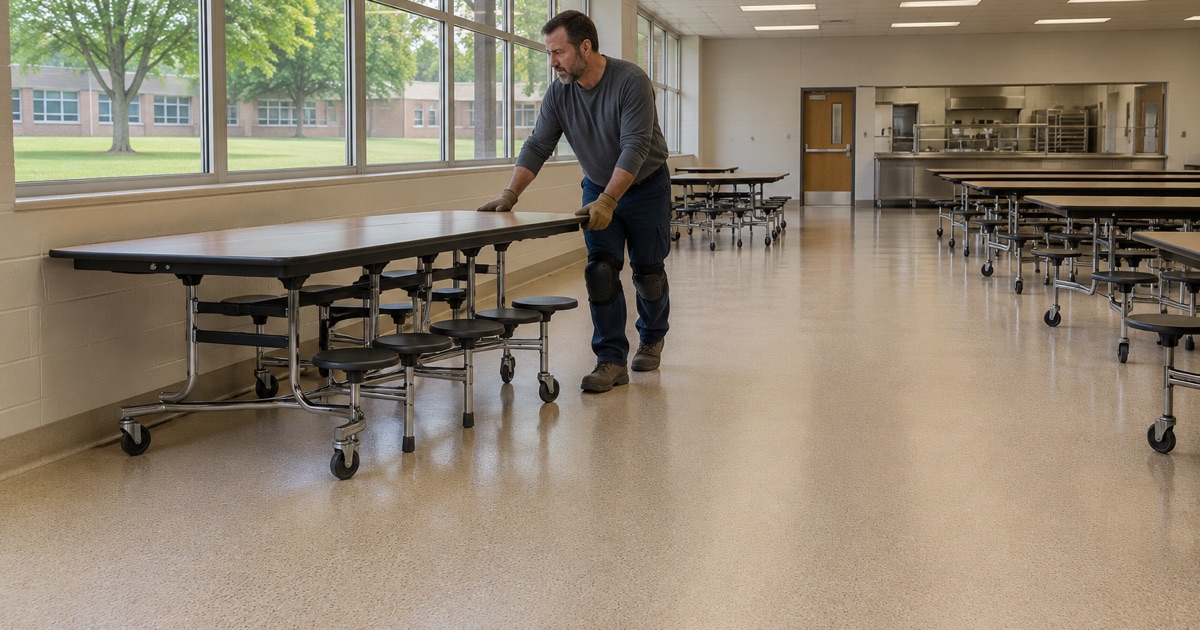
School cafeterias, science labs, locker rooms and maintenance areas each need different floor systems. We schedule work during summer, winter and spring breaks, and use night shifts when a building cannot sit empty long enough. Systems are chosen for the cleaning routines facilities staff already use.
School calendars leave little slack, so we confirm the break dates, the cure time each system needs and any furniture moves well ahead of time. A floor that is still curing on the first day of classes is a failure of planning, and the schedule we write is built backward from the date students return.
Offices and Multi-Tenant Buildings
In office buildings, coated and polished floors appear in lobbies, corridors, break rooms, server rooms and storage areas. Shared air handling means odor control is important, so we choose low-odor products, coordinate with building engineers and notify neighboring tenants. Work is scheduled after hours to avoid disrupting other occupants.
Auto Service and Fleet Bays
Service bays and fleet garages see hot tires, oil, brake fluid, dropped tools and road salt. A thick epoxy build with a chemical-resistant topcoat and texture where fluids spill handles that abuse. Work can be phased bay by bay so a shop keeps servicing vehicles while each section cures.
Scheduling and Phasing Around Operations
Written Phasing Plans
Before we start, we agree on a phasing plan that shows the order of work, which areas will be out of service, cure times before foot traffic and equipment return, and where we will stage materials. This keeps managers, staff and customers informed and avoids surprises.
Night and Weekend Installation
For businesses that cannot close, we work overnight and on weekends. Fast-curing systems and careful sequencing allow many areas to be ground, coated and returned to service between closing and opening. Larger areas are divided into sections that are completed over several nights.
Each night ends with the floor safe to walk on or clearly barricaded, the work area cleaned and equipment stored out of the way. Opening staff should find a finished section or a marked one, never a half-finished floor with tools left in an aisle.
Specifications in Writing
Slip Resistance by Specification
Slip resistance is set by the broadcast aggregate and the topcoat used. We specify both for each area in the proposal, giving wet zones, ramps and entries more texture than dry offices. That way, grip is part of the specification rather than a sales promise.
Illinois VOC Limits
Illinois limits volatile organic compounds in floor and industrial maintenance coatings, and those limits apply to the contractor applying the product as well as the seller. DuPage and Cook counties sit inside the Chicago ozone nonattainment area. We select commercial products that comply for their labeled category.
Moisture Testing and Warranty Terms
Commercial slabs are tested for moisture before pricing, and results determine whether a mitigation primer is needed. We also explain what the coating warranty covers and excludes, especially moisture vapor transmission and hydrostatic pressure, before the contract is signed.
- 20+ Years on Concrete
- Moisture Testing in Every Scope
- Ground, Never Acid-Etched