How an Epoxy Garage Floor Job Runs
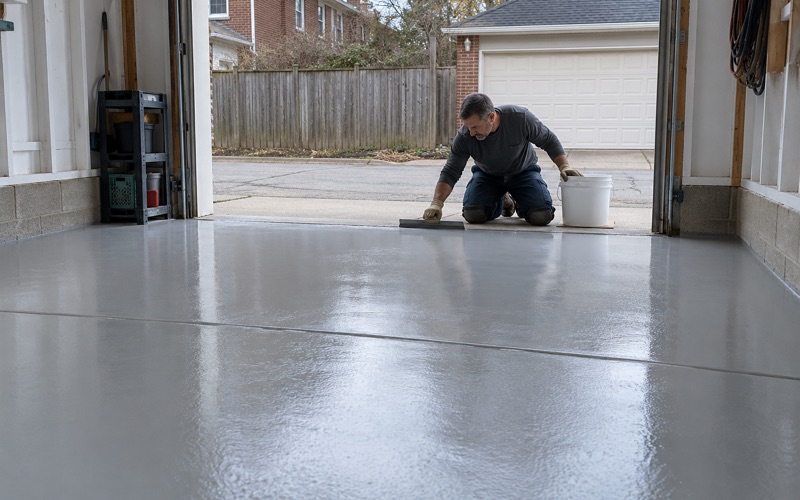
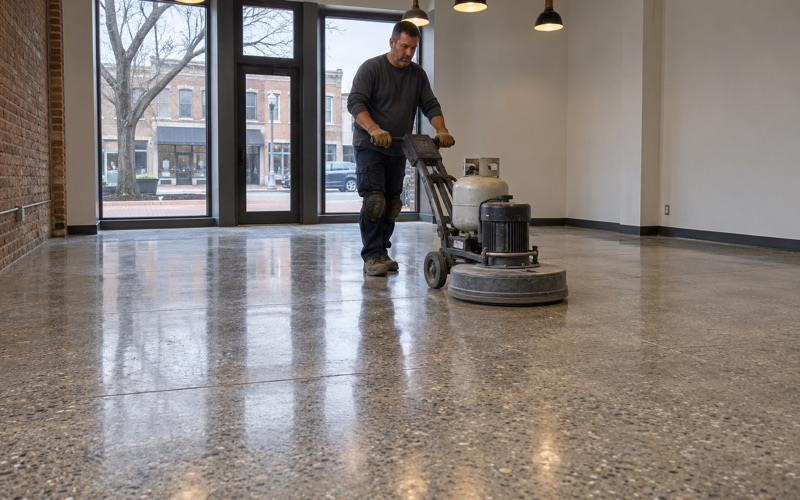
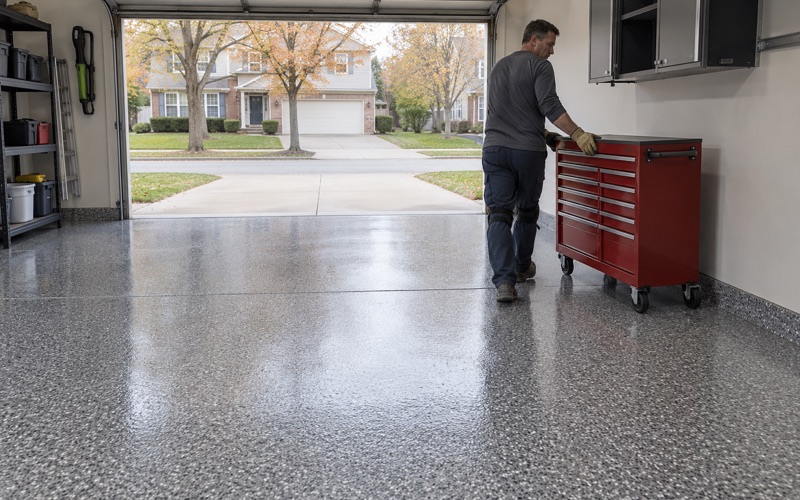
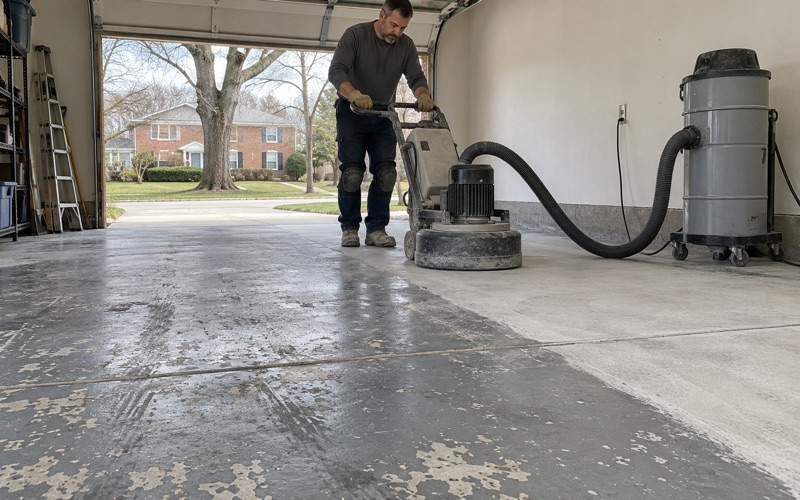
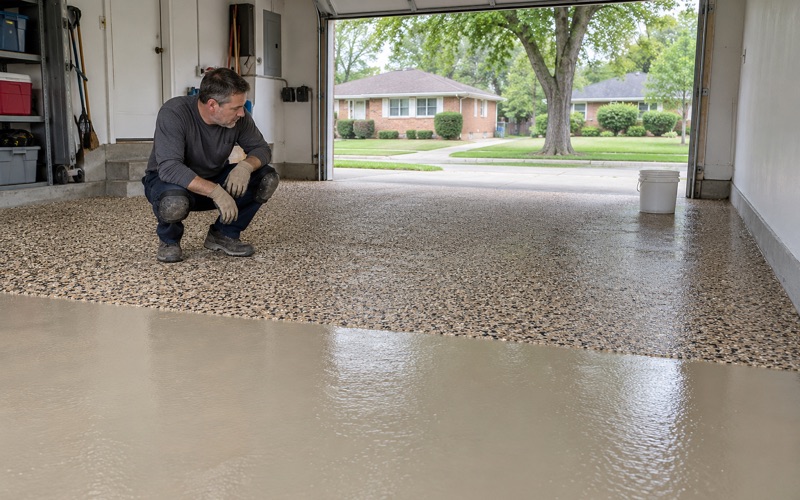
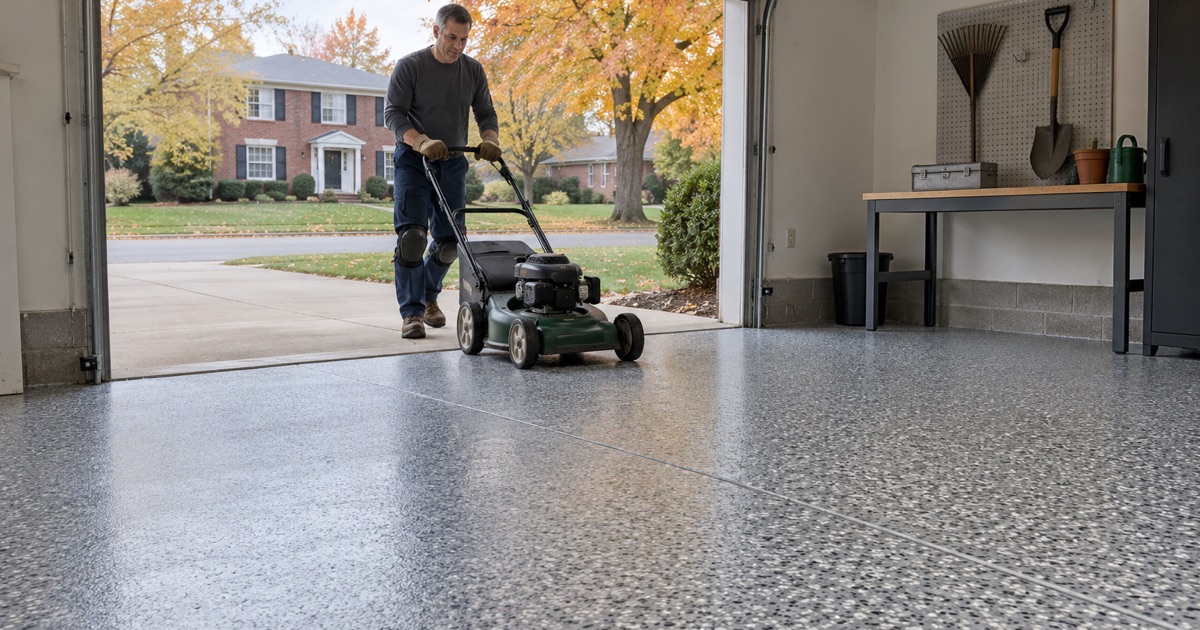
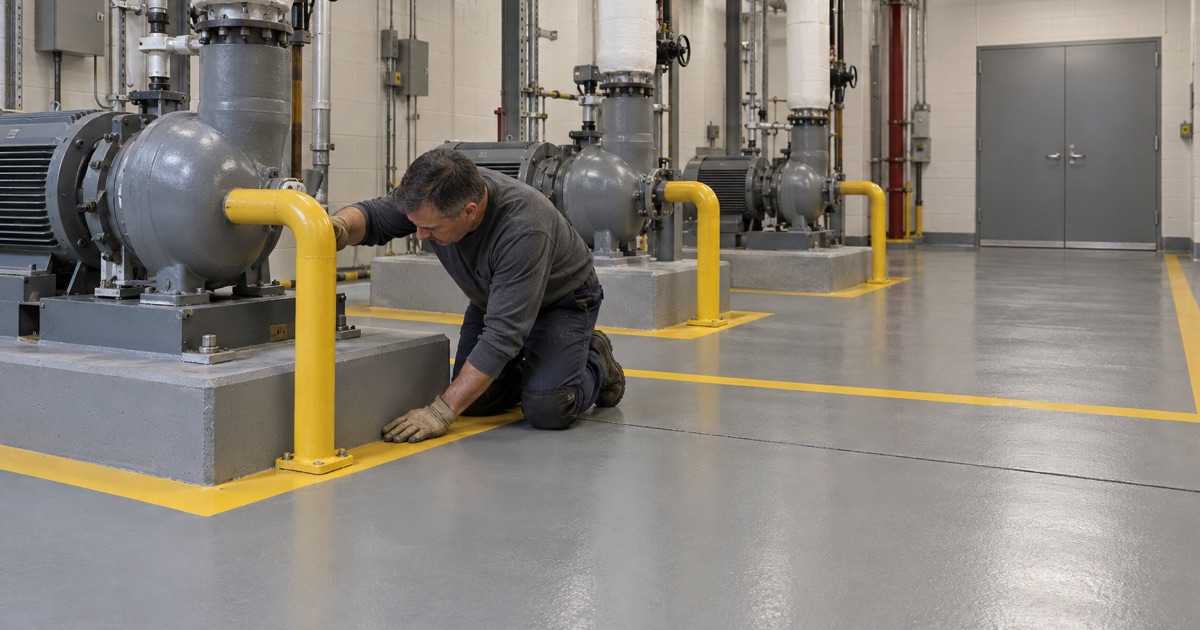
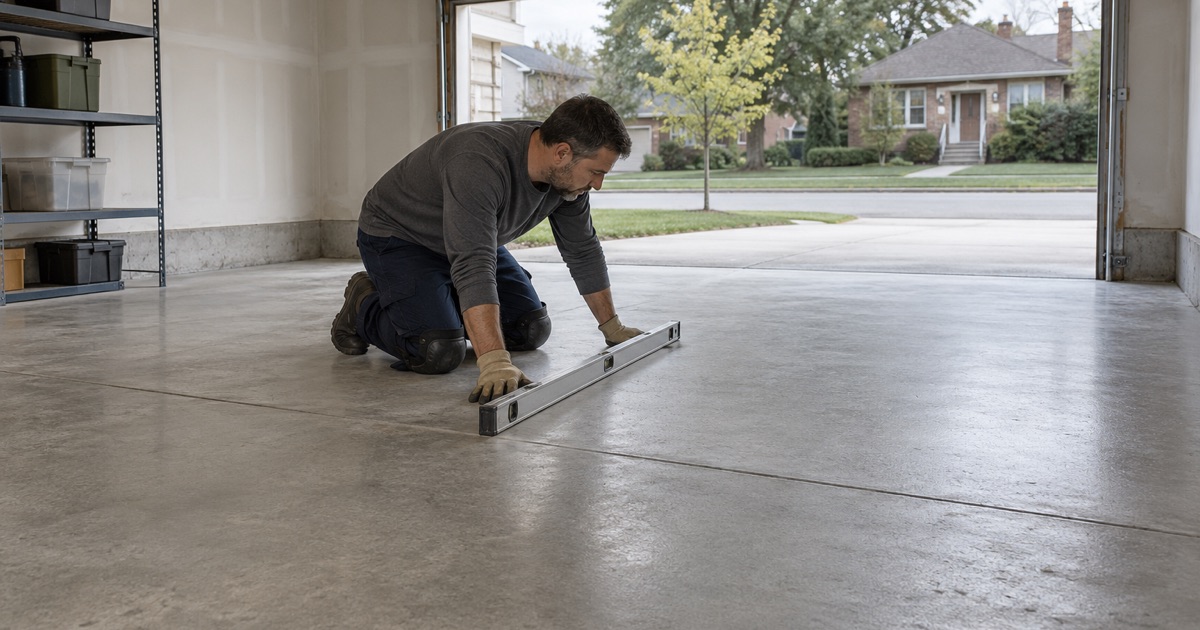
An epoxy garage floor starts with a walk-through, a moisture test and a crack map, then moves to diamond grinding, repairs, a primer, the body coat and broadcast, and a clear topcoat. Foot traffic returns first and vehicles wait longer for a full cure, and we give you those dates in writing so nobody has to guess when the car can come back in.
Attached Garages, Dust and Odor Control
In an attached garage, the door into the house is the weak point for both grinding dust and coating odor. We grind with vacuum-equipped machines that capture dust at the cutting head, seal the house door during the work and ventilate through the overhead door. Low-odor systems are available where someone at home is sensitive to smell during the cure.
Elmhurst’s Vapor Barrier Rule for Attached-Garage Slabs
Elmhurst’s amendment to the 2021 International Residential Code calls for a 6-mil vapor barrier under attached-garage slabs, while detached garages are exempt. A newer attached garage likely has that barrier below the concrete, but an older one may not, and a detached garage never had to. That is why we test each slab rather than assume what lies under it.
Moisture Testing a Garage Slab Before Coating
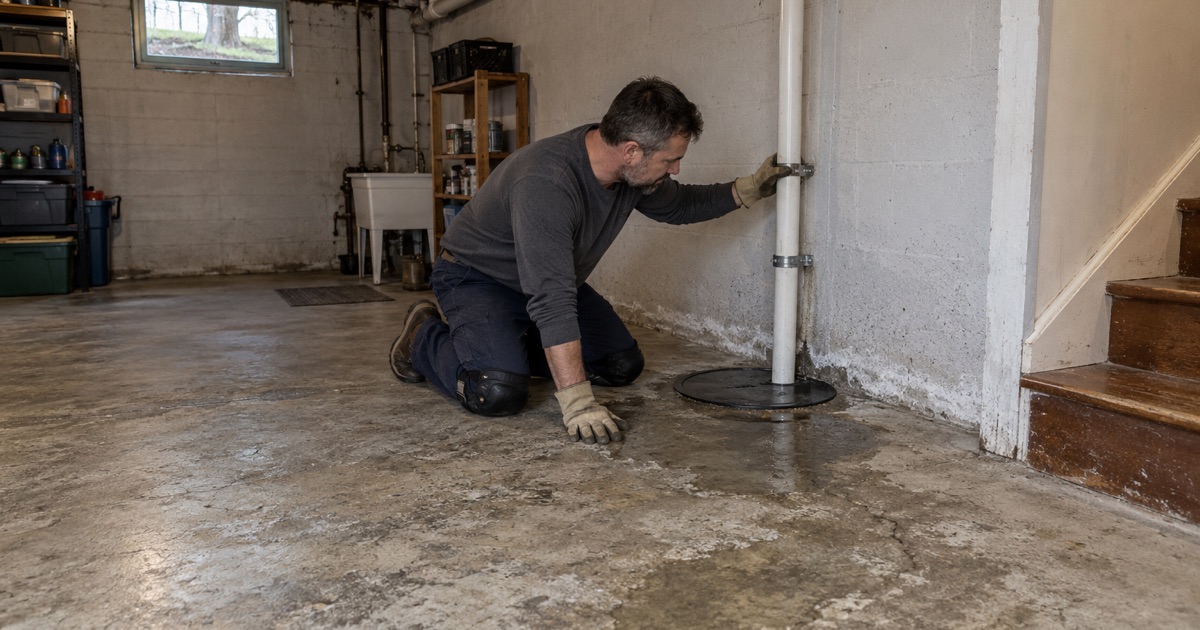
Moisture vapor rising through concrete is what pushes coatings off garage floors in blisters and bubbles. We use ASTM F1869 calcium chloride kits or ASTM F2170 in-situ relative humidity probes, with an ASTM D4263 plastic sheet test as a quick first read. The result decides whether a standard primer works or a moisture-mitigation primer goes down first.
Coating a Garage Slab Versus Replacing It
Coating an existing slab is finish work, and Elmhurst’s code lists finish work among the exemptions from its rule that all work needs a permit. Replacing the slab is a different job: the city calls for 5-inch mesh-reinforced concrete over crushed stone, sloped 2 inches toward the overhead door rather than to a drain. We check the permit question with the city before scheduling either.
Garage Floor Cracks, Spalls and Pitting
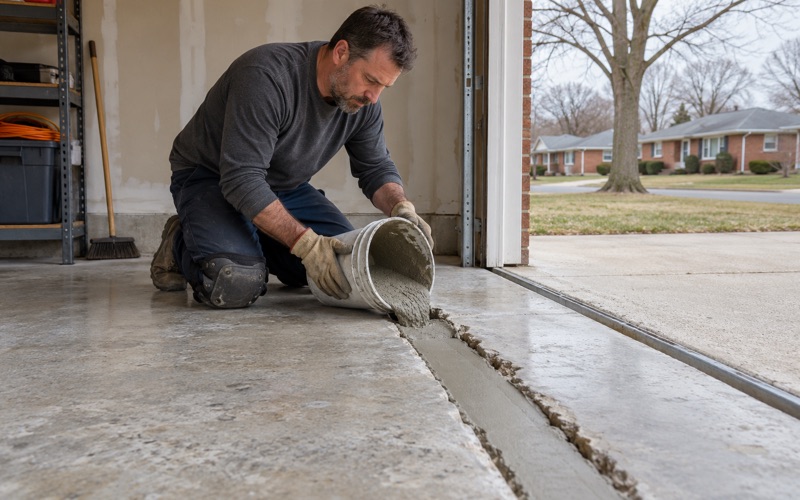
Hairline cracks, shallow spalls and salt pitting are routine repairs, filled with a rigid epoxy or polyurea filler and ground flush before coating. Heaving sections, wide cracks with a vertical offset and slabs that rock underfoot are different, because the movement is still happening. When we find that, we tell you the slab should be replaced before anyone coats it.
What Brine and Rock Salt Do to Bare Concrete
Calcium chloride and rock salt deicers ride in on tires and soak into the surface of a bare garage slab, where repeated freeze-thaw cycles break the top layer into scaling and pitting. Over several winters the damage creeps outward from the tire tracks. A sealed, coated floor keeps that brine on top, where a squeegee can push it out the door.
Cold-Weather Coating in Unheated Garages
Epoxy cures by chemical reaction, and a cold slab slows that reaction or stalls it, leaving a soft film prone to amine blush. We read the slab temperature and the dew point spread at the surface, not the air temperature at the door. An unheated garage in deep winter is told to wait for spring rather than coated to fit a calendar.
Hot Tire Pickup and Peeling Coatings
Hot tire pickup happens when warm tires soften a thin coating and pull it off the slab as the car backs out, often taking a patch of concrete paste along with it. It is most common on thin kit coatings over unprofiled slabs. A ground surface and a 100% solids epoxy body coat under a polyaspartic topcoat resist it.
Store-Bought Epoxy Kits Versus a Professional Floor
Big-box epoxy kits are usually water-based, applied thin over an acid-etched surface, and depend on the slab being clean and dry. A professional floor is ground to a measured profile, built with high-solids material to a stated thickness and topcoated for abrasion. The difference shows the first winter, when salt and hot tires find every weak spot in a thin film.
What an Epoxy Garage Floor Costs
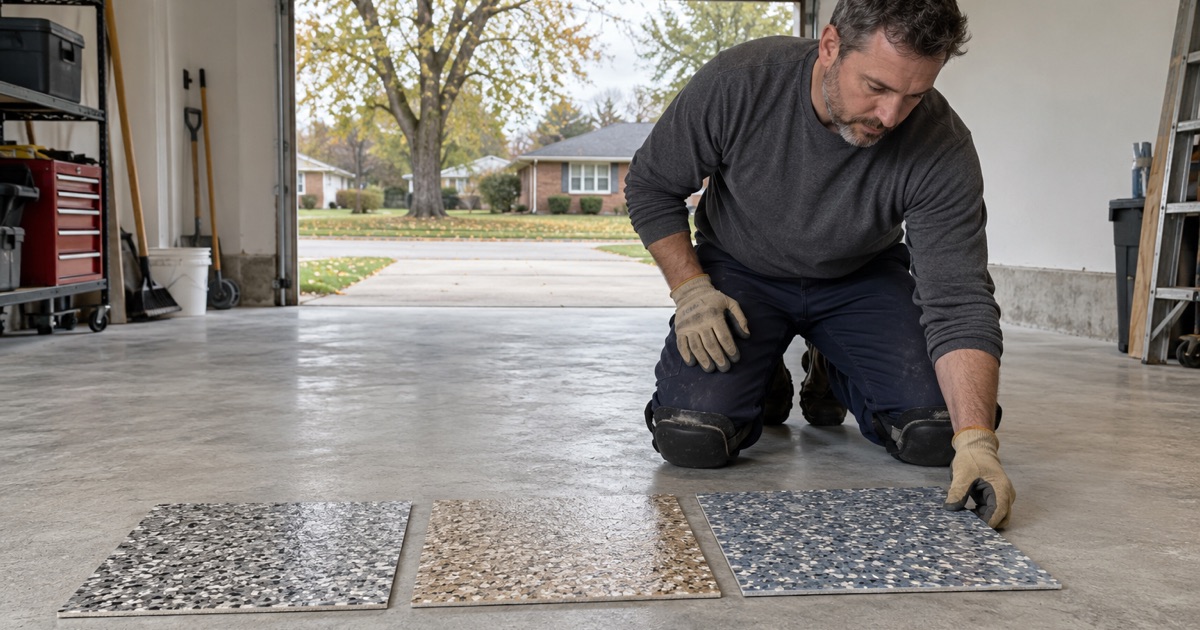
Garage floor price moves with square footage, the condition of the slab, the amount of crack and spall repair, whether a moisture-mitigation primer is needed, and the system chosen, from a flake broadcast to metallic epoxy. We price after measuring and testing, so the number on the proposal covers the floor you actually have rather than a best-case guess.