Elmhurst Epoxy Flooring installs flake epoxy floors in Elmhurst, IL, serving surrounding cities including Northlake, Bellwood, Bensenville, Franklin Park and Westchester. A flake floor, sometimes called a chip or vinyl flake floor, is the most popular finish we install in garages and basements, because it combines color, texture and durability while hiding the small imperfections every slab has. After 20+ years of installing them, we know the look is the easy part.
What makes a flake floor last is everything underneath the chips: a diamond-ground slab, a moisture test, repaired cracks and a base coat applied at the right thickness. A flake broadcast hides a lot, but it cannot hide a coating that is losing its grip on the concrete below.
Our proposals name the base coat, the broadcast type, the chip size and blend, the topcoat and the finished thickness. That way you can compare our quote with others on the same terms and check the finished floor against what was promised.
How a Flake Epoxy Floor Is Built
Grinding and Repair
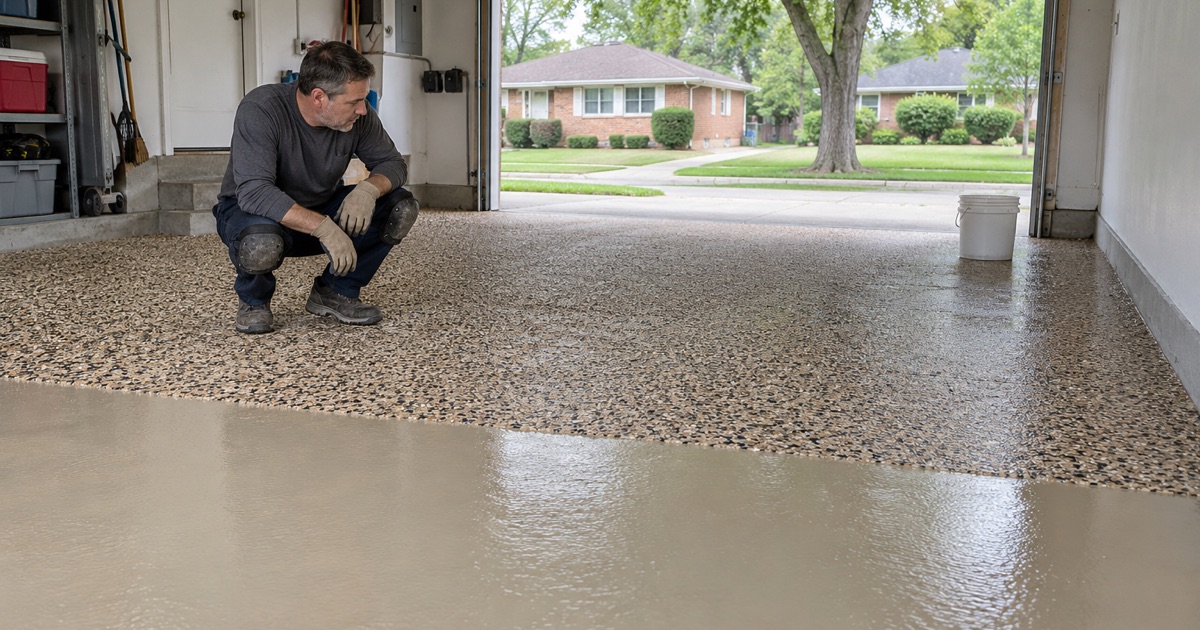
The slab is diamond ground or shot blasted to open the surface and remove sealers, paint and weak paste. Cracks are routed and filled, spalls are rebuilt and pitting is skimmed, then everything is ground flush. Under a full broadcast these repairs become invisible, which is one reason flake floors suit older garages so well.
Base Coat and Color
A primer goes down first, or a moisture-mitigation primer when testing calls for it, followed by a pigmented epoxy base coat. The base color is usually chosen to match the flake blend, so any tiny gaps in the broadcast blend in. On a partial broadcast, the base color becomes a major part of the look.
Broadcasting the Flake
While the base coat is still wet, vinyl flakes are thrown by hand across the floor in an even pattern. For a full broadcast, flakes are added until the base coat is completely covered and no wet resin shows. The chips sink into the resin and lock in as it cures.
Broadcasting is a skill. Uneven throwing leaves light and dark patches, while working too slowly lets the resin skin over before the chips land. Our crews work in coordinated passes, so the pattern looks consistent from wall to wall.
Scraping and Vacuuming
Once the base coat cures, the floor is scraped with a flat blade to knock down chips that stand on edge, then vacuumed thoroughly. This step creates the even surface the topcoat needs and removes loose flakes that would otherwise dislodge later.
Clear Topcoat
A clear topcoat, typically polyaspartic or polyurethane, seals the flakes and provides abrasion and chemical resistance. Its thickness controls both durability and texture: a thinner topcoat leaves more chip texture for grip, while a thicker one gives a smoother, glossier surface. We specify the thickness in the proposal.
Where the floor sees daylight, a UV-stable topcoat keeps the colors from yellowing, which matters in garages where the overhead door stays open on sunny days. An epoxy-only topcoat can amber within a few seasons there, dulling a gray blend toward yellow along the door line.
Choosing Flake Size and Blend
Chip Size
Flakes come in several sizes, from small chips that create a fine speckle to larger ones that create a bolder pattern. Smaller chips give a more uniform, granite-like look, while larger chips read more decorative and hide slab imperfections differently. We bring samples so you can see the difference in your space.
Color Blends
Blends combine several flake colors, often grays, tans, blacks and whites, with an accent color for interest. Mid-tone blends hide dust, salt residue and tire marks better than very light or very dark ones. In basements, lighter blends brighten rooms, while in garages, gray and tan blends are the practical favorites.
Custom blends can be mixed to coordinate with a house’s exterior, cabinets or a business’s colors. We make a sample board with the actual mix before committing to a full floor, because flake colors read differently in a garage than in a showroom photo.
Partial Broadcast Looks
A partial broadcast lets the base color show between scattered flakes, which creates a lighter, more contemporary look and uses less flake. It does not hide imperfections as well as a full broadcast, and it shows wear sooner in heavy-traffic areas, so we usually recommend it for basements and light-use spaces.
Where Flake Epoxy Floors Work Best
Garages
Flake floors are ideal for garages because they hide tire marks, dust and minor wear, add texture underfoot and resist road salt, oil and hot tire pickup when built properly. We build garage systems to handle the brine and slush that ride in on tires through DuPage County winters.
Basements
In basements, flake floors provide a clean, durable surface for laundry rooms, gyms, storage areas and family rooms. They resist spills and are easy to clean. We test basement slabs for moisture before quoting, because a flake floor is only as reliable as the dryness of the slab beneath it.
Commercial Rooms
Flake systems are also used in locker rooms, restrooms, break rooms, retail back rooms and light commercial spaces. They provide a durable, slip-resistant and easily cleaned surface that hides wear between maintenance cycles, and they can be installed with a cove base where walls meet the floor.
Condominium and Apartment Garages
Shared parking garages benefit from flake floors as well, with work phased by section so residents always have somewhere to park. Stall lines and directional arrows can be added after the topcoat cures.
Texture, Grip and Long-Term Care
Controlling Texture
Texture is set by the broadcast and the topcoat. A thinner topcoat over a full broadcast leaves the chip edges for grip, while a fine aggregate in the topcoat adds more. We specify texture by area, giving garage aprons and entries more grip than interior workshop space.
Cleaning a Flake Floor
Sweep or dust-mop regularly to remove grit, then mop with warm water and a pH-neutral cleaner. In winter, squeegee meltwater and brine out of the garage rather than letting it dry on the floor. Avoid harsh solvents and acidic cleaners unless the topcoat is rated for them.
Refreshing the Topcoat
After years of use, heavy-traffic lanes may begin to dull. Because the color is locked in the flake layer, a worn floor can often be lightly abraded and recoated with fresh topcoat rather than replaced. We can assess an older flake floor and tell you whether a recoat will restore it.
- 20+ Years on Concrete
- Moisture Testing in Every Scope
- Ground, Never Acid-Etched