
Elmhurst Epoxy Flooring provides concrete floor repair in Elmhurst, IL, serving surrounding cities including Northlake, Bellwood, Bensenville, Franklin Park and Westchester. Cracks, spalls, salt pitting and broken joints are the most common problems we find under garage, basement and commercial floors, and in 20+ years of preparing slabs we have learned which ones a repair can solve and which ones it can only hide for a season.
Every repair job starts with a map. We walk the slab, mark each crack, spall, patch and joint, measure any offsets and note where water collects. That map becomes part of the written scope, so the repair work is priced on what the floor actually needs rather than discovered halfway through.
When a slab is beyond repair, we say so. A floor that is heaving, broken through or still moving needs replacement, not filler, and coating it anyway only wastes money on a finish that will crack along with the concrete beneath it.
Crack Repair
Hairline and Shrinkage Cracks
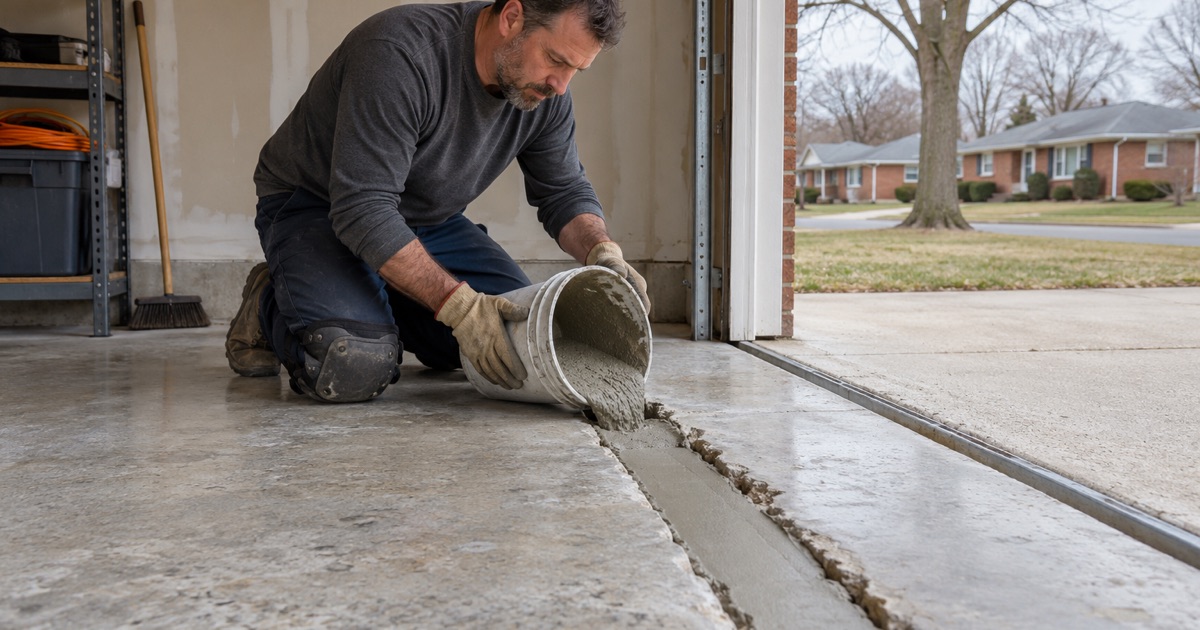
Almost every slab develops fine shrinkage cracks as it cures and ages. These are usually dormant and do not affect the slab’s strength. We open them slightly with a crack chaser so the filler can penetrate, fill them with a rigid repair material and grind them flush, which leaves a sound, smooth surface ready for coating or polishing.
Moving and Structural Cracks
Cracks that are widening, show a vertical offset or run alongside heaving sections are signs of active movement. Settlement, frost, poor base preparation or water under the slab can all cause them. Filling such a crack does not stop the movement, so we explain the likely cause and whether the section needs repair, stabilization or replacement before any coating.
We often recommend watching a suspicious crack through a season before committing to a coating. Marking its ends and measuring its width in spring and again in fall is a simple way to see whether it is still moving.
Choosing the Right Filler
Rigid epoxy fillers bond strongly and suit dormant cracks under coatings. Polyurea and polyaspartic fillers cure quickly and allow same-day coating. Semi-rigid fillers are better in control joints that see slight movement and wheel traffic. We choose the material based on the crack, the traffic and the system that will go over it.
Spalls, Pitting and Salt Scaling
Salt Scaling in Garages
Calcium chloride and rock salt carried in on tires soak into bare garage concrete, and repeated freezing and thawing breaks the surface into flakes and shallow pits. The damage usually starts in the tire tracks and near the door. We grind away loose material, rebuild the surface with a repair mortar or skim coat, and seal the slab under a coating to stop the cycle.
New concrete in Elmhurst is protected against one part of the problem: the city’s building code does not permit calcium chloride as an admixture. The deicer that rides in on tires each winter is another matter, and only a sealed surface keeps it out.
Rebuilding Spalls and Broken Edges
Spalls are areas where chunks of concrete have broken away, often at joints, around drains or where heavy loads have struck the slab. We cut back to sound concrete, prime the area and rebuild it with a high-strength repair material, then grind it flush with the surrounding floor so the surface is continuous.
Skim Coats for Widespread Pitting
When pitting covers large areas, spot repairs leave a patchwork. A thin, trowel-applied skim coat of epoxy or cementitious repair material fills the pits across the whole area, creating an even base for coating. It also hides the patchy look of many small repairs when the floor is finished with flake or quartz.
Joint Repair
Control Joints in Homes and Garages
Control joints are cut to guide cracking into straight lines. In coated garages and basements, they are either filled and coated over for a seamless look or honored and filled with a flexible sealant, depending on whether the slab is still moving. We explain which approach suits your floor.
Joint Edges in Warehouses and Plants
Hard forklift and pallet jack wheels chip unprotected joint edges, which grow into wide, broken joints that jolt equipment and loads. We rebuild broken edges with repair mortar and fill the joints with a semi-rigid filler that supports the wheels. Fixing joints before coating prevents the new floor from breaking along them.
In busy facilities we repair joints aisle by aisle, so racking and loading areas stay in use while each section cures. Fast-curing fillers let many aisles return to service within the same shift.
Repair, Resurface or Replace
When Repair Is Enough
If the slab is sound overall, with dormant cracks, localized spalls or surface scaling, repairs followed by a coating or polish will usually give years of service. Most garage and basement floors fall into this group, even when they look rough at first glance.
When the Slab Should Be Replaced
Widespread heaving, sections broken through, severe settlement or floors that rock underfoot point to problems under the slab that repairs cannot fix. Replacement is new construction, and in Elmhurst a replaced garage slab must meet the city’s specifications, including 5-inch reinforced concrete over a crushed stone base. We tell you when replacement is the right path and check the permit requirements with the city.
Basement Slab Repairs
Cracks That Leak Water
A basement crack that lets in water during heavy rain is not a surface repair. Water under pressure will push through any filler or coating, and trapping it can make matters worse. We recommend addressing the source with drainage or waterproofing work first, then repairing and coating the floor once it stays dry.
Patching Plumbing Trenches and Old Pits
Basement remodels often leave trenches where drain lines were moved, or old pits that were filled in. These patches can settle or crack if the fill underneath was not compacted well. We check them for soundness, repair any voids or cracks and grind them level before coating, so the patch does not show through the finished floor.
- 20+ Years on Concrete
- Moisture Testing in Every Scope
- Ground, Never Acid-Etched